SOBHANBAG MOSQUE
Name of Project
SOBHANBAG MOSQUE
Client
Public Works Department
Location
Sobhanbag, Dhaka
Project Type
Religious
Status
Completed
Architectural firm
VITTI STHAPATI BRINDO LTD.
Photography
Mud Canvas
SOBHANBAG MOSQUEEnduring Faith in a Changing City
The Sobhanbag Mosque has witnessed Dhaka’s transformation for nearly a century, standing quietly as the city grew, swelled, and redefined itself around it. Built in 1937 by Maulana Abdus Sobhan, it began as a sanctuary, intimate in scale yet vast in spiritual intent.
At that time, the neighborhood breathed with calm simplicity: a tree-lined road meandered past small homesteads and gardens, where the call to prayer floated softly through open air. The mosque belonged to that gentler Dhaka - a city of shadows and sunlight, of human scale and stillness - long before glass towers and the ceaseless hum of traffic claimed the horizon.
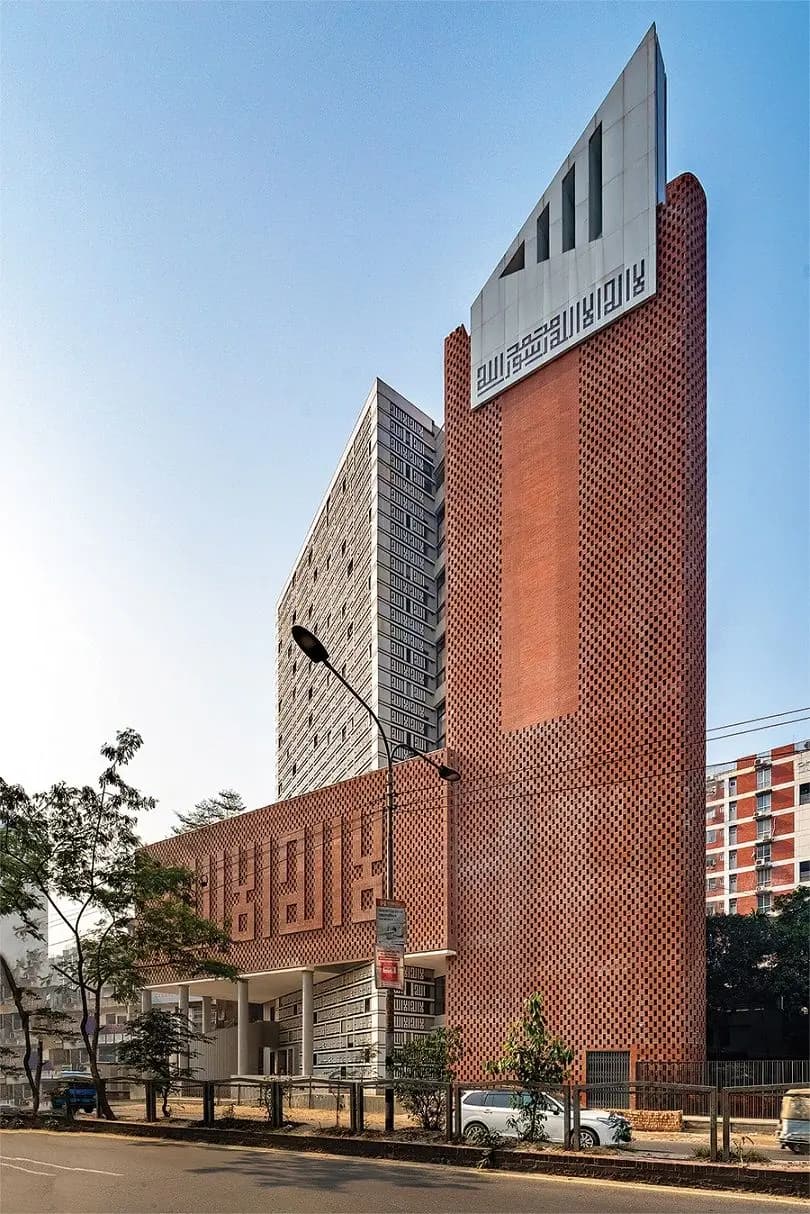
Over the decades, the Sobhanbag Mosque adapted, reshaped, and renewed itself in quiet dialogue with the city it served. Its second transformation came in the early 1990s, when a local patron led a renovation that gave it its defining red-brick façade - an act inspired by the tectonic clarity of Louis Kahn’s National Parliament House. The design expressed a renewed sense of strength and belonging, its material language rooted in the tactile and cultural identity of Bengal.
But the city around it refused to pause. Dhaka surged upward and outward, its skyline tightening, its streets thickening with the unbroken pulse of urban life. Commercial façades crowded in, residential towers loomed closer, and the once-breathing edges of the three-storey mosque were gradually suffocated by the city’s hardening fabric of concrete. The space that had once opened gently to its surroundings now stood compressed, its modest form battling for light, air, and stillness. Within its walls, generations prayed. On Fridays and during Eid, the faithful overflowed into the street, their lines of devotion halting traffic and briefly silencing the city’s restlessness.